

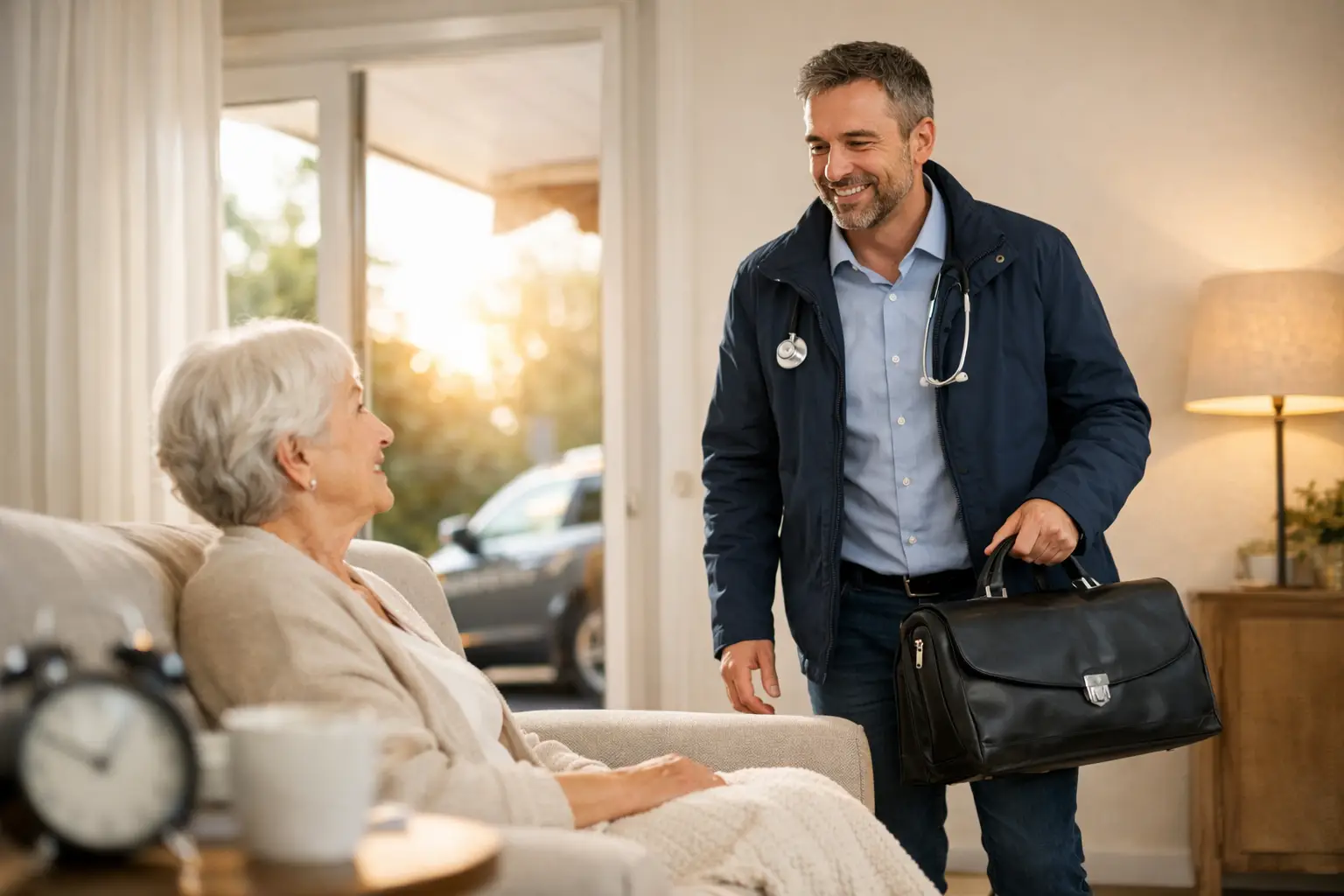
Saturday evening: the child suddenly has a fever, the cough is getting worse, or a painful bladder infection makes sleep impossible. In exactly these moments, many search for “gp home visit on weekends”—and they primarily mean one thing: fast, reliable medical help without sitting for hours in the waiting area of an on-call practice or going to the emergency room unnecessarily with their symptoms.
When a GP home visit on the weekend makes sense
A home visit on the weekend is particularly useful when there is an acute but non-life-threatening illness and the journey to a practice or clinic would likely worsen the condition or is simply unreasonable. This applies to people with high fevers, severe infections, gastrointestinal complaints, circulatory weakness, painful inflammation, mobility restrictions, or significant exhaustion.
Families with small children also often face this exact dilemma. Driving a sick child through the city at night or on the weekend is stressful—for both the child and the parents. It is similar for elderly people, hotel guests, business travelers, or individuals who wish to be treated discreetly in their own environment.
A clear distinction is important: a home visit is not a replacement for emergency services. In the event of chest pain, shortness of breath, signs of paralysis, severe disturbances of consciousness, seizures, or other emergencies, 112 is the correct number. On the other hand, those who need medical help but do not have an acute life-threatening emergency often benefit from an on-site examination.
GP home visit on weekends – what is possible?
Many still associate the term with the classic country doctor of past decades. In reality, the modern house call on weekends is much more than a quick listen with a prescription pad. Depending on the situation, a complete medical assessment can be performed on-site – including medical history, examination, consultation, and specific treatment.
Typical reasons for a weekend visit include respiratory infections, fever, flu-like symptoms, sore throats, earaches, gastrointestinal infections, urinary tract infections, allergic reactions without acute shortness of breath, circulatory problems, states of exhaustion, or painful symptoms that should be medically assessed promptly.
In addition, there are services that are particularly helpful for many patients in acute cases: wound care, prescriptions, sick notes, treatments for children, or even infusions, if they are medically appropriate. The advantage lies not only in the treatment itself but in the calmness of the situation. At home, in a hotel, or in an apartment, it is often possible to discuss what is really needed in a more focused and personal way.
Especially on the weekend, this combination of medical assessment and direct care counts. Often, it is not just a question of which medication helps, but whether further clarification is necessary, what is acceptable until the next working day, and at what point a clinic should be visited after all.
Not every acute symptom requires the emergency room
Many people drive straight to the emergency room on weekends out of uncertainty. This is understandable, but not always the best solution. Emergency rooms are there for severe and potentially dangerous cases. Those who arrive with a febrile infection, a painful throat inflammation, or an uncomplicated bladder infection often have to wait a long time—and still only receive basic care in the end.
A home visit can be the more pleasant and often more appropriate alternative in such situations. The doctor comes to the patient, assesses the situation in a familiar environment, and can specifically decide what can be treated immediately and where the limits are reached. This exact assessment is medically valuable.
This does not mean that a home visit is always the right answer. If diagnostic technology is required immediately, if inpatient admission becomes likely, or if a condition deteriorates rapidly, there is no way around a clinic. Good medical care recognizes both: what can be cared for at home and what cannot.
The difference between 116117 and 112
Anyone looking for a GP home visit on the weekend often ends up with three paths: emergency services, the statutory on-call medical service, or a private GP home visit. These services fulfill different tasks.
112 is for real emergencies. If a life-threatening situation cannot be ruled out, comfort is not the issue; immediate emergency care is.
116117 organizes the statutory on-call medical service for symptoms that cannot wait until the next regular office hours. This is an important part of healthcare. However, depending on the region, time, and workload, patients must expect waiting times, may be referred to an on-call practice, and naturally experience more standardized care.
A private GP home visit starts at a different point. Here, direct accessibility, treatment at the place of residence, more personal time, and a service-oriented process are the priorities. For people seeking fast help on the weekend without travel, waiting rooms, and organizational effort, this can be the decisive difference. Billing is transparent according to the GOÄ—meaning it is not a statutory health insurance service, but a private medical service.
For whom is a weekend home visit particularly helpful?
Not every patient has the same reasons. For some, it is comfort; for others, the physical strain; for still others, the desire for discretion. A medical home visit on the weekend is particularly helpful for families with sick children, for elderly or mobility-impaired people, and for individuals who do not want to head out while suffering from fever, chills, or weakness.
Business travelers and hotel guests also frequently benefit. Anyone who suddenly falls ill in an unfamiliar city knows neither the local structures nor wants to spend a long time searching, waiting, or traveling with acute symptoms. Treatment directly in the hotel room is then not only more convenient but often significantly less stressful.
In addition, there are patients who value personal care. Medical quality is shown not only in diagnostics but also in whether symptoms are recorded calmly, questions are answered, and the next steps are clearly explained. Especially outside regular practice hours, this guidance is crucial for many.
How a weekend home visit typically works
The process is simpler for many than they expect. First, the symptoms are described. This involves symptoms, onset, previous illnesses, medications, and the question of whether there are warning signs of an emergency. At this point, it already becomes clear whether a home visit is appropriate or whether another form of care would make more sense.
If a visit is scheduled, the examination takes place directly on-site. There, symptoms can be specifically categorized, vital signs recorded, and treatments initiated depending on the findings. Often, this immediate combination of assessment and therapy is the greatest advantage. You don’t have to endure the drive, registration, and waiting time before anyone even looks at the actual situation.
Equally important is the communication afterward. What suggests an uncomplicated course, what should be observed, which medications are recommended, and when is further diagnostics needed? Professional mobile medicine provides not just an initial measure, but clear guidance.
What patients should know in advance
Anyone requesting a GP home visit on the weekend should be able to describe what it is about as specifically as possible. How long have the symptoms existed? How severe are they? Is there fever, pain, vomiting, breathing problems, known illnesses, or regularly taken medications? This information helps to correctly assess the urgency.
Expectations should also be realistic. A home visit offers a lot—but not everything without limit. It is ideal for acute general medical complaints, assessments, and many direct treatments. However, it does not replace a hospital, complex imaging, or emergency medicine with intensive care structures.
This is precisely why the distinction is so valuable. Good care does not mean promising as much as possible, but organizing the right help in the right place. A reliable mobile medical service will always be open about when hospital care is the better decision.
Why a home visit on the weekend is the better solution for many
The actual added value is rarely just that someone comes. It lies in the fact that medical help takes place where patients are anyway—without additional effort, without confusing routes, and without the feeling of having to take a number in the system first.
For people in Nuremberg, Fürth, Erlangen, and the surrounding area, this can make the difference on the weekend: not waiting until symptoms get worse, but also not rushing to the emergency room. Services like nightdoc.de close exactly this gap with private medical care on-site, personal attention, and transparent billing.
If you need medical help on the weekend, the most important question is not just how quickly someone can be reached. The decisive factor is whether you receive care that fits your situation—medically, personally, and without unnecessary detours.


Leave a Reply