When severe symptoms suddenly appear, a clear decision is paramount. That’s precisely when the question often arises: 112 or a doctor’s home visit? Knowing the difference saves time in an emergency, avoids unnecessary trips, and ensures that the right medical help arrives at the right place.
112 or Doctor’s Home Visit – What Really Matters
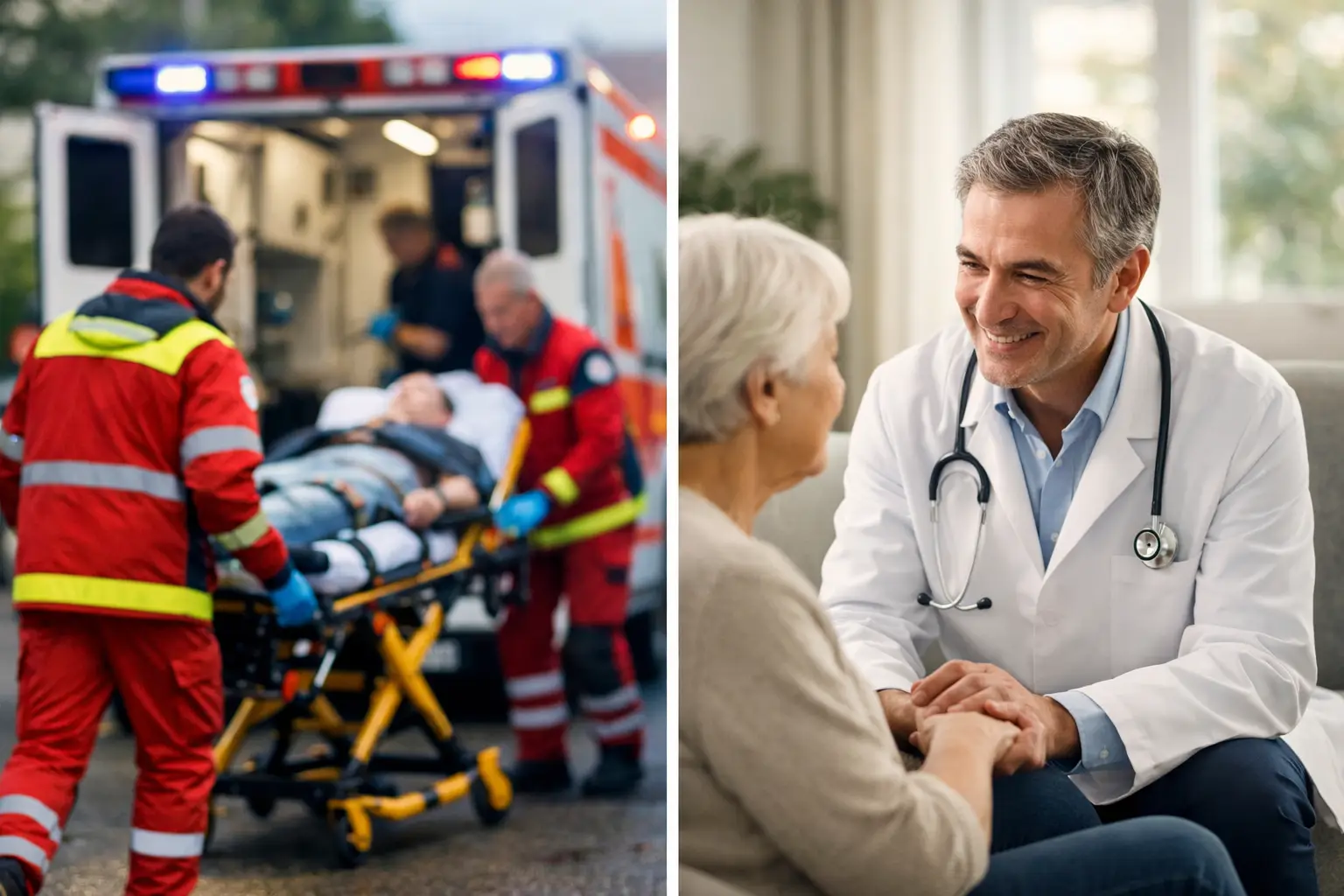
The most important distinction is simple: If there is a life-threatening situation or if the condition could dramatically worsen in a very short time, 112 is the right choice. If it concerns acute but not life-threatening symptoms, a doctor’s home visit can be the more sensible and significantly more comfortable solution.
Many people hesitate in such moments. They don’t want to unnecessarily alert emergency services, nor do they want to wait too long with serious symptoms. This is precisely why a clear classification is so important. Not every severe symptom is an emergency. But not every illness that can be treated at home feels harmless.
A doctor’s home visit is particularly useful when examination and treatment are needed promptly, but the condition appears stable. This applies, for example, to fever, infections, gastrointestinal complaints, pain, circulatory problems without collapse, wound care, urinary tract infections, or acute symptoms in children, provided there are no signs of immediate life-threatening danger.
When You Should Call 112 Immediately
There are situations where no further deliberation is necessary. Emergency services and often hospital care are then required. These include severe chest pain, shortness of breath, paralysis, speech disorders, seizures, unconsciousness, severe allergic reactions, heavy bleeding, or suspected stroke or heart attack.
Also, in cases of severe accidents, head injuries with impaired consciousness, or sudden, extreme pain, do not wait for a home visit. The same applies to children if they appear noticeably apathetic, have severe difficulty breathing, are no longer drinking enough, or are rapidly deteriorating.
Uncertainty is human. However, if you have the impression that someone cannot be safely transported, appears significantly unstable, or every minute counts, calling 112 is always the right decision. When in doubt, a genuine emergency is more important than the fear of overreacting.
When a Doctor’s Home Visit Can Be the Better Solution
Not every acute illness belongs in the emergency room. On the contrary: many symptoms can be better assessed and treated at home in a calm environment, especially if traveling outside would be stressful.
A doctor’s home visit is often appropriate for high fever, sore throat, cough, bronchitis, flu-like symptoms, gastrointestinal complaints, vomiting, diarrhea, back pain, migraines, urinary tract infections, skin rashes, or minor injuries. For elderly people, families with sick children, hotel guests, or individuals with limited mobility, a home visit is frequently the most practical form of care.
The advantage is not just comfort. At home, it’s often possible to assess more accurately how distressed a person truly is. There’s no waiting room, no travel, and usually significantly more peace for anamnesis, examination, and treatment decisions. This is a real added value, especially outside regular practice hours.
The Difference Between 112, 116117, and a Private Home Visit
When seeking medical help, people often consider three options: 112, 116117, or a private doctor’s home visit. However, they serve different purposes.
112 is for acute emergencies with potential life-threatening situations. This involves rapid rescue, stabilization, and, if necessary, transport to the hospital.
116117 is the statutory health insurance on-call service for complaints that cannot wait until the next regular office hours but are not emergencies. They mediate whether an on-call practice, a telephone assessment, or in some cases, a home visit is possible. This system is important but can involve waiting times and organizational detours depending on demand.
A private doctor’s home visit starts at a different point. It is aimed at people who want prompt medical care without waiting rooms, without travel, and with personal attention at their location. This is particularly relevant for self-payers, privately insured individuals, business travelers, families, or people who value discretion and direct accessibility.
Typical Situations Where People Make the Wrong Decision
In practice, two mistakes are particularly common. The first: symptoms are underestimated. Someone waits too long despite clear warning signs, hoping it will get better. This can be dangerous, for example, with shortness of breath, neurological deficits, or severe chest pain.
The second mistake is overestimating every acute symptom as an emergency. Those who go directly to the emergency room with a febrile infection, gastrointestinal illness, or painful but stable inflammation often experience long waiting times and unnecessary stress. In such cases, a home visit can be medically entirely sufficient and organizationally much more sensible.
The crucial factor is not how uncomfortable something feels, but whether there are signs of instability, life-threatening danger, or a rapidly critical course. Severe symptoms always deserve medical attention – but not always an ambulance.
What’s Possible During a Home Visit
Many underestimate how comprehensive modern mobile medicine can be. A home visit doesn’t just mean a quick check-up and advice to go to the practice the next day. Depending on the situation, examination, therapy recommendations, prescription issuance, sick leave certificates, wound care, infusions, or the treatment of typical acute illnesses are possible directly on-site.
Especially for children, elderly people, or exhausted patients, this makes a noticeable difference. Those who are ill often need not only medicine but also peace, guidance, and treatment without additional burden. This is often better achieved in a familiar environment.
For people in hotels, apartments, or on business trips, another aspect is added: they often don’t know the regional healthcare structure. In such cases, a clearly organized home visit is not only convenient but simply the fastest and most reliable solution.
112 or Doctor’s Home Visit for Children
With children, uncertainty is particularly high because conditions can change rapidly. Generally, for shortness of breath, seizures, impaired consciousness, bluish skin color, noticeable apathy, or a significantly reduced general condition, 112 is the correct choice.
It’s different for fever, earaches, coughs, vomiting, abdominal pain, or skin rashes, as long as the child remains responsive, drinks, and shows no severe warning signs. In these cases, a home visit can be very helpful because transport, waiting rooms, and additional stressors are avoided.
For parents, it’s not just about the medical assessment. It’s also about relief. Taking a sick child out of the house at night or on the weekend is often physically and organizationally strenuous. If the situation is stable, medical help at home can bring significantly more calm to an already stressful situation.
How to Make a Good Decision in an Acute Situation
First, ask yourself: Is the person awake, responsive, and stable? Is there shortness of breath, severe chest pain, paralysis, heavy bleeding, or impaired consciousness? If yes, no further deliberation is needed – call 112.
If the symptoms are urgent but appear stable, the next question helps: Does a doctor need to examine them today, even if there’s no life-threatening danger? If the answer is a clear yes, a home visit is often the appropriate solution. Especially if traveling to a practice or emergency room would be unnecessarily stressful.
Another point is the environment. Elderly people living alone, exhausted parents with a sick child, hotel guests, or individuals with limited mobility particularly benefit from on-site medical care. This is not about convenience in a superficial sense, but about sensible, dignified, and well-organized care.
In the Nuremberg, Fürth, and Erlangen area, many patients use a private mobile medical service like nightdoc.de for precisely this reason: not as a substitute for emergency services, but as fast medical help for acute, non-life-threatening symptoms outside regular practice hours.
The Better Question is Often Not Just 112 or Doctor’s Home Visit
Often, the right question is not just who is responsible, but what care is medically appropriate and humanly sensible in this situation. Emergency services are indispensable when things get serious. A doctor’s home visit is strong when quick help is needed, but an emergency ambulance is not the right setting.
Both have their place. Those who know the differences act more calmly and usually better. And that’s what helps most in an acute case: no rush, no false shame, but a clear decision for the care that truly fits now.
If you are unsure, pay less attention to the label of the complaint and more to the condition of the person in front of you. This often leads to the right choice faster than any theoretical rule.


Leave a Reply